 01
Fuel tank level monitoring
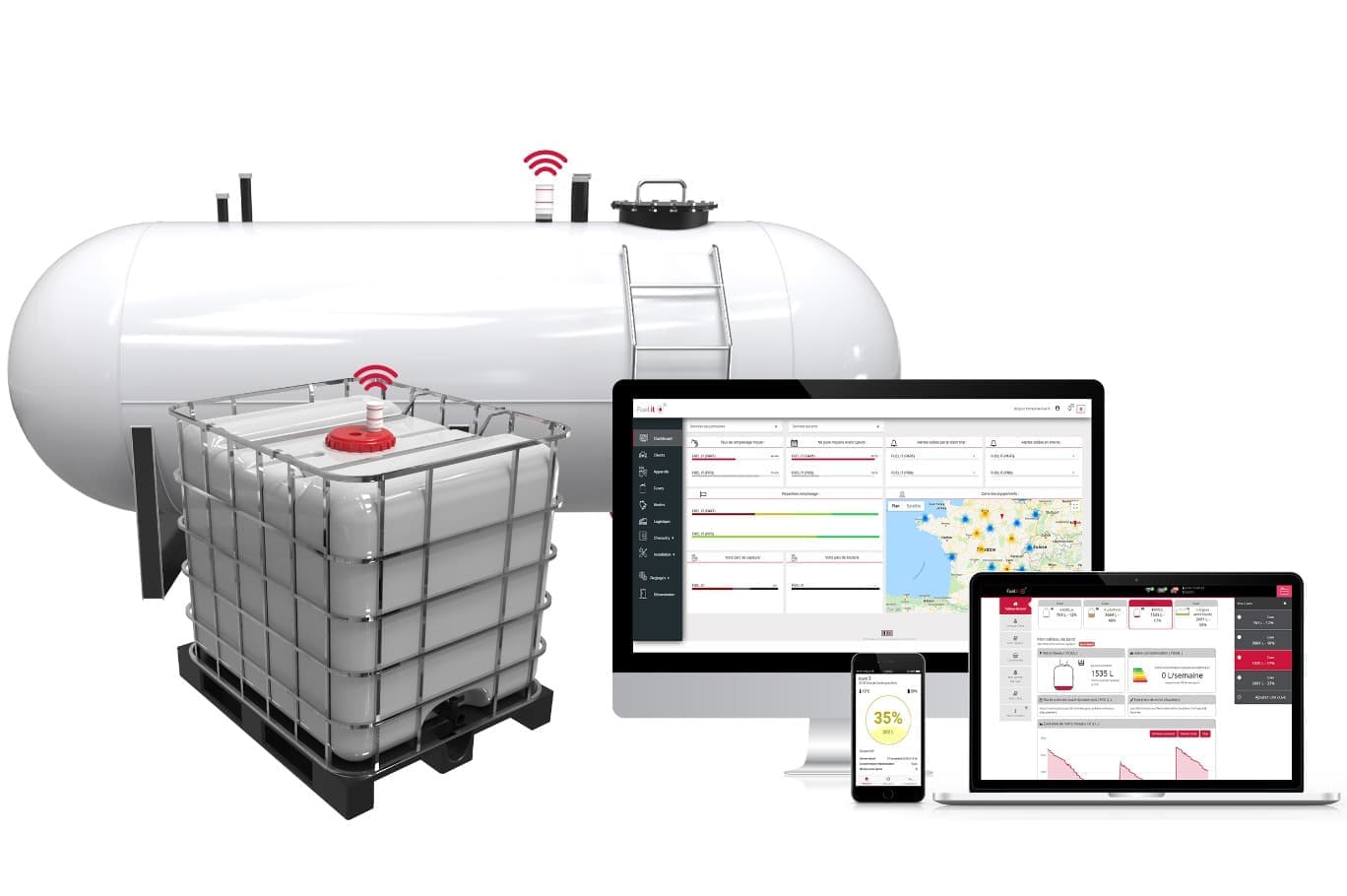
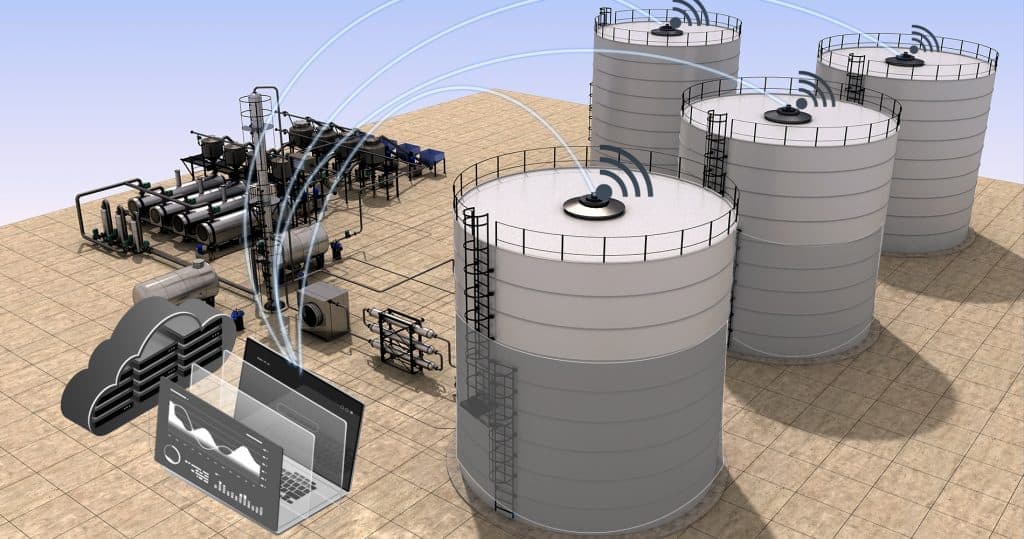
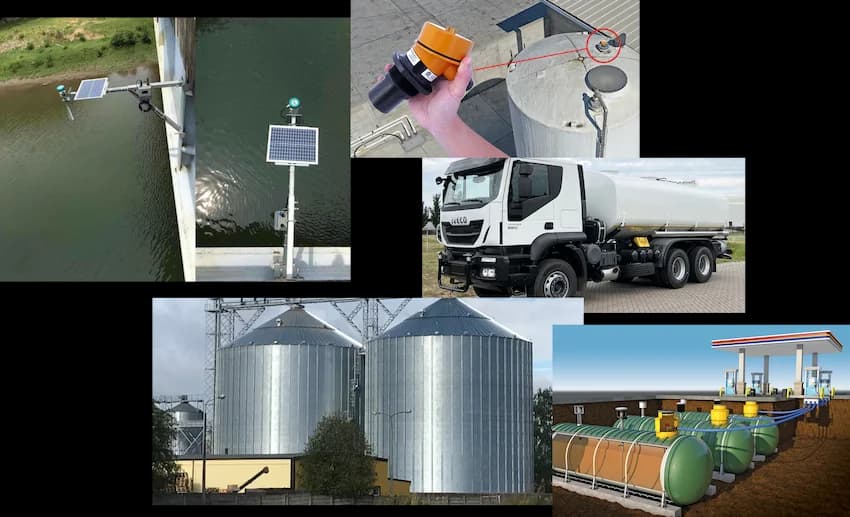
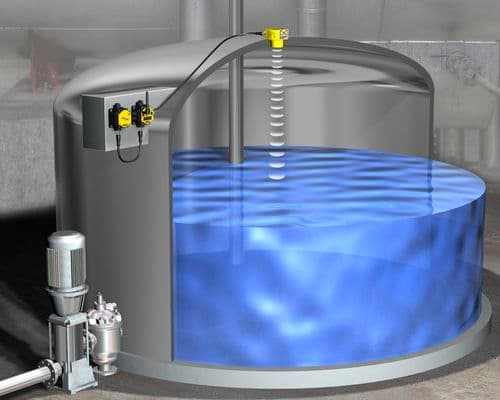
An IoT-based liquid level monitoring solution helps you monitor and control fuel levels in both mobile fuel tanks such as diesel tanks and fixed tanks at the gas station. Managers can remotely keep track of fuel levels in real time.
Intro
When it comes to measuring fuel levels, there can be some real downsides: a number of application challenges can compromise a sensor’s accuracy. Where an explosive atmosphere of gas or vapor can form, for example at fuel tanks and gas stations, equipment must be certified for the hazardous zone (ATEX): talk to us before installing.
Challenge
Most fuels can be measured effectively if you choose your sensor wisely. Here are three application challenges that can derail your level measurement if you let them:
Vapor. Vapor is a by-product of almost all fuels. It causes two problems. First, it can stop an ultrasonic sensor from working properly if it develops thick layers. Second, it builds pressure in tanks, which can confuse other types of sensors. Vapor layers can become thick enough that an ultrasonic sound wave echoes off them, which causes a false reading. This is only a problem with thick vapor that forms layers; light vapor, especially if well vented, does not cause it.
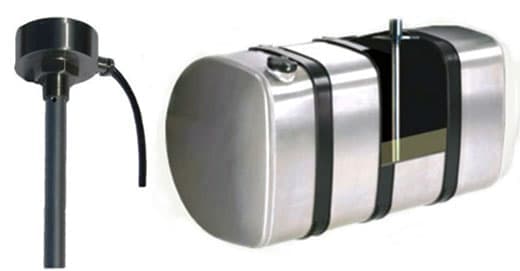
If vapor is not well vented, it can build up pressure inside a tank or vessel. As the pressure above the liquid adds to the pressure of the liquid itself, pressure sensors are no longer a viable way to calculate a level. In this case, you have to use differential pressure or a float-based sensor (both on request). If the pressure builds too much, it can overwhelm a sensor’s mounting threads and push it out of its mount. This is usually not a concern for fuel tanks, but it can happen to sensors with plastic threads and housings on sealed (unvented) tanks.
Tank vents. To avoid over-pressure, most fuel tanks are vented. But this does not end concerns over tank pressure: it depends on the type of vent.
If the vent is open (no valve), pressure is not a concern. However, many vents have a pressure valve that releases only after several psi have built up inside the tank. This is enough to ruin the accuracy of a submersible pressure transducer (on request), as only a few psi equal several feet of fuel.
Variable density. Density, or specific gravity, determines how much volume will fill a tank. Density can vary quite a bit with temperature swings, so on a warm spring day a half-full tank will drop during the night as temperatures fall.
The problem with variable density is not that the level changes, but that the level relative to pressure changes. This is another complication for pressure sensors. Submersible pressure transducers (on request) are often used for fuel level measurement, but in this situation it is time to look at another option.
Benefits
The main benefit of an IoT-based liquid level monitoring solution is scalability. It covers your entire fleet as you grow, and you can scale the deployment down as you need. It helps you optimize inventory levels to save time and money.